Back Pain Relief in South River, NJ: Your Physical Therapy Options

Medically reviewed by Devanshi Modi, PT, Cert. MDT, CMP — licensed physical therapist with over 15 years of clinical experience.
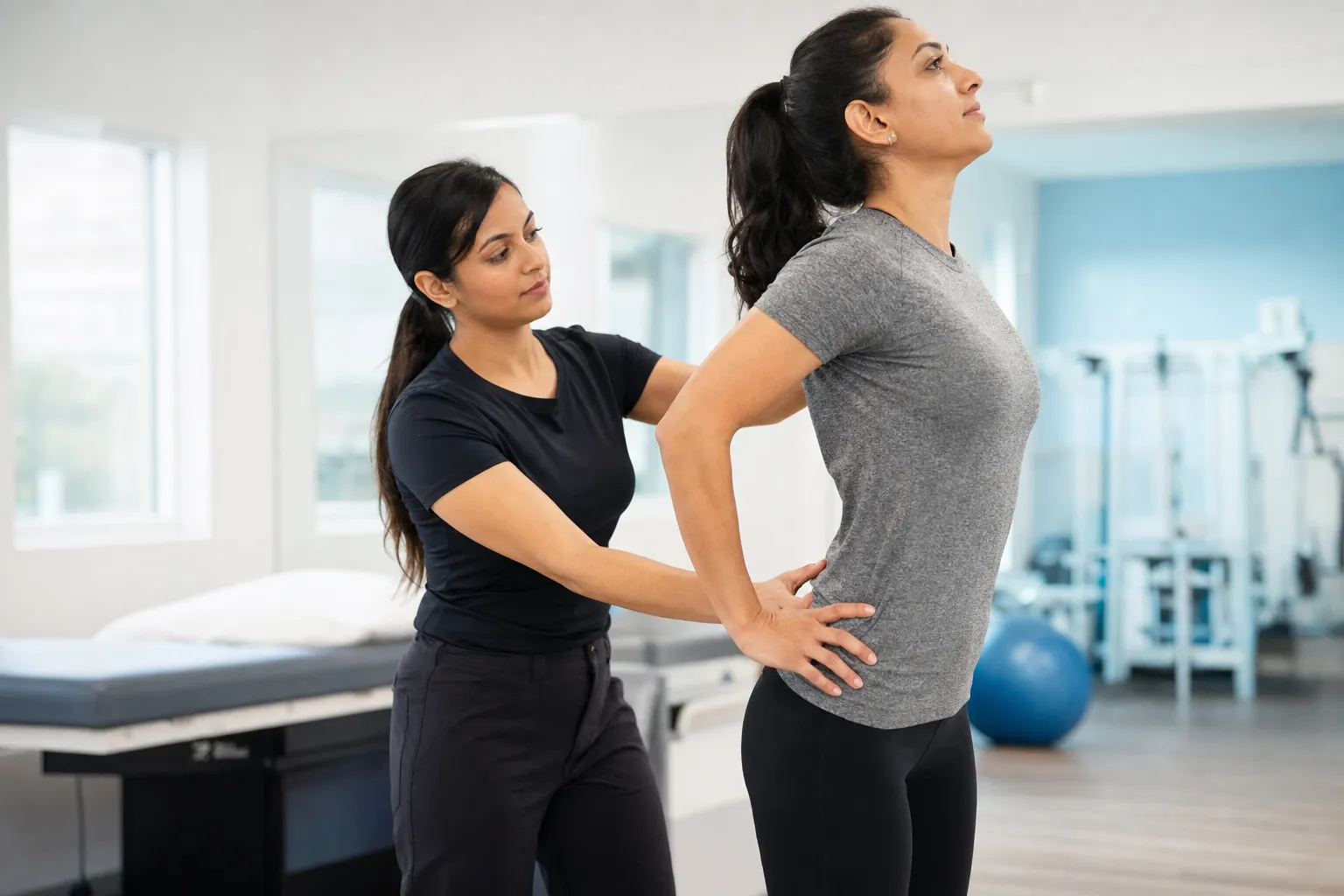
If you live in South River and back pain is getting in the way of your day, you have quality, specialized physical therapy just a short drive away. Many of our patients come to us from South River, and back pain is one of the most common reasons they walk through our door. Here is what your options look like and how a movement-based assessment can help guide your care.
Back Pain Is Common, but You Have Options
Back pain is very common, and low back pain is now the leading cause of disability worldwide.[1] Most people with a new episode of low back pain recover quickly, but it often comes back, and for a small proportion of people it becomes persistent and disabling.[1]
Whether your pain started after lifting something heavy, builds up during long hours at a desk, or has been a recurring problem for years, physical therapy can help you understand what aggravates and eases it and learn ways to manage it. Guidelines recommend starting with non-drug care, such as education that supports self-management, staying active and exercise.[2] For low back pain lasting more than three months, exercise therapy probably reduces pain in the short term compared with no treatment, usual care or placebo (on average by about 15 points on a 0–100 scale), although its effect on day-to-day function is smaller.[3]
A Short Drive for Specialized, Assessment-First Care
Spineck Physical Therapy is located on Route 18 in East Brunswick, an easy trip from South River. For nearly all people with low back pain, it isn't possible to pinpoint a specific cause,[1] so my assessment focuses on how your back responds to movement. As a McKenzie Method (Cert. MDT) certified therapist, I use a structured assessment of repeated movements and positions to look for the ones that aggravate your symptoms and the ones that ease them, then build a plan around your back specifically. In studies of people with back or neck pain, about two in three had either a directional preference (a direction of movement that eases their symptoms) or centralization (pain retreating from the leg or arm back toward the spine), while about a third had neither.[4] When these responses are present, they are linked with a better outlook, especially in low back pain; the evidence for neck pain is more limited.[4]
What We Help South River Patients With
- Lower back pain and sciatica-type symptoms radiating into the leg
- Neck pain and related headaches or arm symptoms
- Pain that builds with sitting, driving, or repetitive tasks at work or home. Research has linked postures and physical tasks like these with low back pain, but there is no consensus that they cause it.[5]
- Long-lasting or recurring pain, including pain that has lasted for months or keeps coming back
One-on-One Care With the Same Therapist Every Visit
Every appointment is one-on-one with me — the same therapist every visit, never handed off to an aide. Because I see you every time, I can follow how your symptoms respond from one week to the next and adjust your plan, and you don't have to re-explain your history to someone new. Continuity may matter for back pain: in a study of insurance claims for people with low back pain, those who saw the same physical therapist more consistently were less likely to have back surgery and had lower back-pain-related costs.[6] Because it was an observational study, it shows a link, not proof that continuity caused the difference.
You will also learn exercises and strategies to manage your symptoms at home. Guidelines recommend education that supports self-management,[2] and in a review of 21 randomized trials, exercise combined with education lowered the risk of an episode of low back pain by about 45% (moderate-quality evidence).[7] It isn't a guarantee, though: in a randomized trial of 262 adults who had recently recovered from low back pain, a two-session McKenzie-based self-management program did not meaningfully reduce recurrences over the following year, although it may have reduced the need to seek care when pain returned.[8]
If you are in South River and would like a one-on-one assessment of your back pain and a plan to manage it, we would love to help. Call us at 551-208-3234 to schedule your evaluation.
References
- Hartvigsen J, Hancock MJ, Kongsted A, et al. What low back pain is and why we need to pay attention. Lancet. 2018;391(10137):2356-2367. doi:10.1016/S0140-6736(18)30480-X · PubMed
- Foster NE, Anema JR, Cherkin D, et al. Prevention and treatment of low back pain: evidence, challenges, and promising directions. Lancet. 2018;391(10137):2368-2383. doi:10.1016/S0140-6736(18)30489-6 · PubMed
- Hayden JA, Ellis J, Ogilvie R, et al. Exercise therapy for chronic low back pain. Cochrane Database Syst Rev. 2021;9(9):CD009790. doi:10.1002/14651858.CD009790.pub2 · PubMed
- May S, Runge N, Aina A. Centralization and directional preference: an updated systematic review with synthesis of previous evidence. Musculoskelet Sci Pract. 2018;38:53-62. doi:10.1016/j.msksp.2018.09.006 · PubMed
- Swain CTV, Pan F, Owen PJ, et al. No consensus on causality of spine postures or physical exposure and low back pain: a systematic review of systematic reviews. J Biomech. 2020;102:109312. doi:10.1016/j.jbiomech.2019.08.006 · PubMed
- Magel J, Kim J, Thackeray A, et al. Associations between physical therapy continuity of care and health care utilization and costs in patients with low back pain: a retrospective cohort study. Phys Ther. 2018;98(12):990-999. doi:10.1093/ptj/pzy103 · PubMed
- Steffens D, Maher CG, Pereira LS, et al. Prevention of low back pain: a systematic review and meta-analysis. JAMA Intern Med. 2016;176(2):199-208. doi:10.1001/jamainternmed.2015.7431 · PubMed
- de Campos TF, Pocovi NC, Maher CG, et al. An individualised self-management exercise and education program did not prevent recurrence of low back pain but may reduce care seeking: a randomised trial. J Physiother. 2020;66(3):166-173. doi:10.1016/j.jphys.2020.06.006 · PubMed
This article is for general education and is not a substitute for an individual evaluation by a licensed clinician.
Need Help With Your Condition?
If you're experiencing pain or have questions about physical therapy, schedule an appointment with our Certified McKenzie Therapist.
This article is for educational purposes only and is not a substitute for professional medical advice, diagnosis, or treatment. Always consult a licensed healthcare provider about your specific condition.