How to Choose the Best Physical Therapist in East Brunswick, NJ

Medically reviewed by Devanshi Modi, PT, Cert. MDT, CMP — licensed physical therapist with over 15 years of clinical experience.
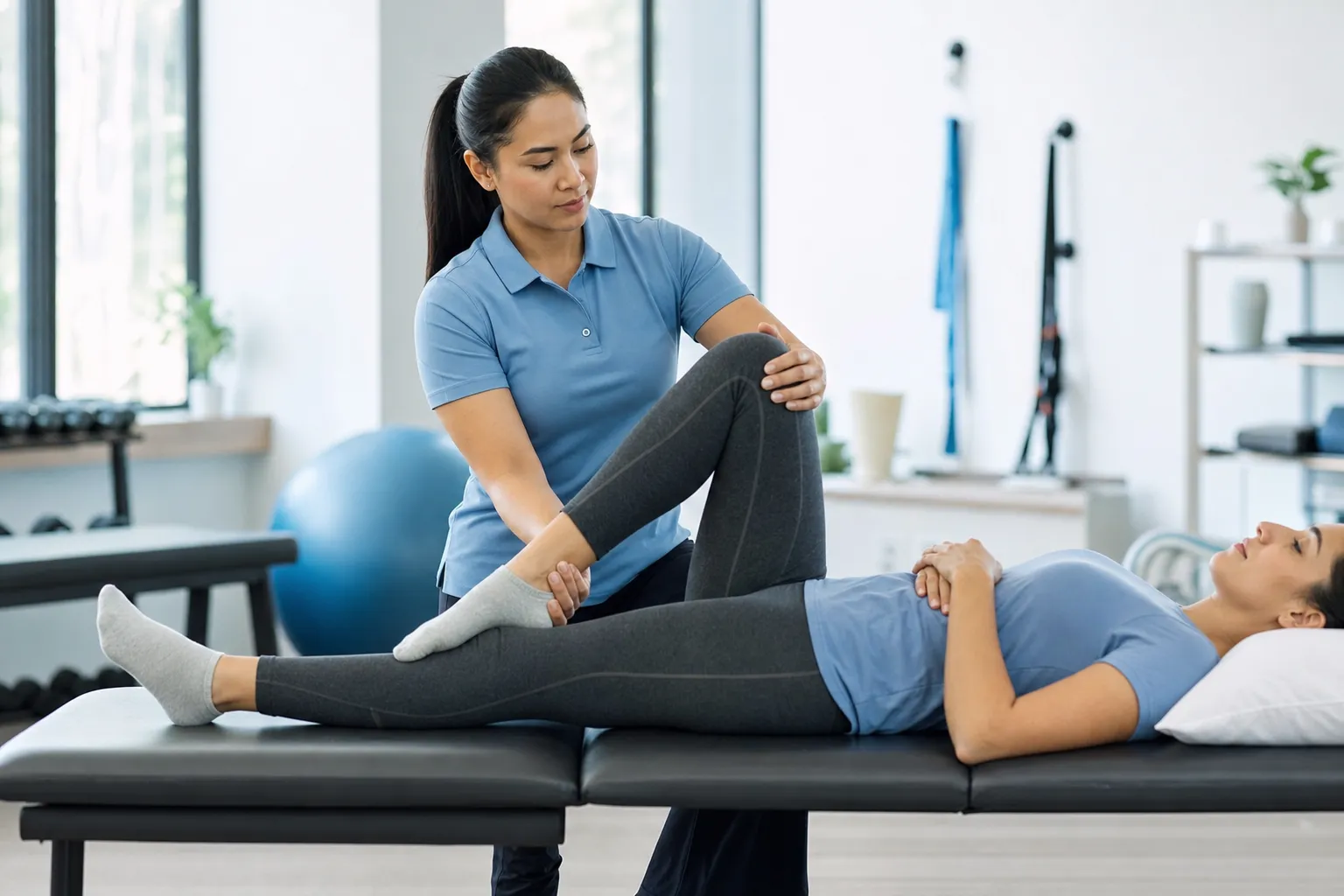
Choosing the right physical therapist can make a difference in your recovery. In a large study of more than 500 outpatient rehabilitation clinics and 90,000 patients, differences between clinics and therapists explained about 12% of the variation in patients' function at discharge, after accounting for how they started, and the researchers could clearly separate higher-performing clinics from lower-performing ones.[1] With many options in East Brunswick and the surrounding area, how do you know which clinic is right for you? Here's what to look for and why it matters.
What Makes a Great Physical Therapist?
1. Advanced Certifications
Many therapists pursue specialized training beyond their degree. Research on whether this training improves patients' results is limited and mixed. In a study of more than 20,000 patients with low back pain, those whose therapists had any McKenzie training had slightly better function at discharge and needed slightly fewer visits than those whose therapists had none, and results did not differ significantly by level of McKenzie training.[2] In another large study of patients with musculoskeletal conditions, patients of fellowship-trained therapists had statistically greater improvement, residency training was not linked with greater improvement, and it is unknown whether the differences were large enough to matter to patients.[3] Both were observational studies, so they can't show that the training itself caused the differences. Certifications you may see include:
- Cert. MDT (McKenzie Method) - Advanced training in an assessment-based approach used for back and neck problems. It has been tested for low back pain in more than a dozen randomized trials: for chronic low back pain it reduced disability more than exercise alone but not more than manual therapy plus exercise.[4] For low back pain of less than 12 weeks, it has not been shown to work better than other care, and a Cochrane review found that any benefits were too small to be clinically important (low- to very low-certainty evidence).[4][5]
- OCS (Orthopedic Certified Specialist) - Advanced orthopedic expertise
- SCS (Sports Certified Specialist) - Sports rehabilitation expertise
- Manual therapy certifications - Hands-on treatment skills
2. One-on-One Treatment Model
This is worth asking about, though research on session format is limited: a review of 14 randomized trials in people with back, neck, knee, or shoulder pain found only small, clinically unimportant differences in pain and disability between group and individual physical therapy that included exercise.[6] Ask these questions:
- Will I see the same therapist every visit?
- Will my therapist be treating other patients during my session?
- Will I be passed off to aides or technicians?
Continuity may matter: in a U.S. study of insurance claims for people who saw a primary care provider for low back pain, those who saw the same physical therapist more consistently were less likely to have back surgery and had lower back-pain-related health care costs, although this type of study can't prove cause and effect.[7] Some clinics also schedule one therapist with more than one patient at a time, so it's worth asking how much of your session you'll spend directly with your physical therapist.
3. Experience with Your Condition
Different therapists have different areas of interest and training, so it's reasonable to ask how often they treat problems like yours. A clinic's results can also vary by condition: in the large clinic study mentioned above, clinics' results for back and shoulder problems tended to go together, but some clinics ranked in the top fifth for one condition and the bottom fifth for the other.[1]
4. Evidence-Based Approach
Quality physical therapists use treatments supported by research. For low back pain, for example, clinical practice guidelines broadly agree on first-line care that includes education to help you manage on your own, getting back to normal activities, and exercise.[8]
5. Patient Reviews and Outcomes
Check Google reviews and ask about patient outcomes. Look for:
- Consistent 5-star reviews
- Specific mentions of conditions similar to yours
- Comments about the therapist's expertise and attention
Red Flags to Avoid
Watch out for clinics that:
- Aren't upfront about whether your therapist will be treating other patients during your session
- Rely mainly on aides or technicians for your care (in a U.S. study of nearly 64,000 outpatients using 2000–2001 data, use of therapy aides was linked with more visits and lower function at discharge, an association rather than proof of cause)[9]
- Hand you a generic home exercise sheet without supervising or adjusting your program (for chronic low back pain, individually designed exercise programs delivered with supervision may improve pain more than exercising at home on your own)[10]
- Rely mainly on passive treatments such as ultrasound or electrical stimulation instead of active exercise (for chronic low back pain, a Cochrane review found the evidence does not support therapeutic ultrasound,[11] and exercise is probably more effective than electrotherapy[12])
- Rush through evaluations
- Don't explain your condition or treatment plan (for low back pain, guidelines make education that helps you manage on your own part of first-line care)[8]
Questions to Ask Before Your First Visit
- Will I see the same therapist every session?
- What certifications does the therapist have?
- How much one-on-one time will I receive?
- What is your treatment philosophy?
- How do you measure progress?
Why Spineck PT Stands Out in East Brunswick
At Spineck Physical Therapy, we address each of these factors:
- McKenzie Certified Therapist with 15+ years of experience
- True one-on-one care - you're the only patient in the room
- 128+ five-star Google reviews from satisfied patients
- Evidence-based treatment guided by current clinical practice guidelines and research
- Convenient location on Route 18 with free parking
Making Your Decision
The right physical therapist for you depends on:
- Your specific condition
- Your treatment preferences
- Your schedule and location needs
- Your insurance coverage
Don't settle for mediocre care. Your recovery is too important.
Experience one-on-one physical therapy in East Brunswick. Call 551-208-3234 to schedule your consultation at Spineck Physical Therapy.
References
- Gozalo PL, Resnik LJ, Silver B. Benchmarking outpatient rehabilitation clinics using functional status outcomes. Health Serv Res. 2016;51(2):768-789. doi:10.1111/1475-6773.12344 · PubMed
- Deutscher D, Werneke MW, Gottlieb D, et al. Physical therapists' level of McKenzie education, functional outcomes, and utilization in patients with low back pain. J Orthop Sports Phys Ther. 2014;44(12):925-936. doi:10.2519/jospt.2014.5272 · PubMed
- Rodeghero J, Wang YC, Flynn T, et al. The impact of physical therapy residency or fellowship education on clinical outcomes for patients with musculoskeletal conditions. J Orthop Sports Phys Ther. 2015;45(2):86-96. doi:10.2519/jospt.2015.5255 · PubMed
- Lam OT, Strenger DM, Chan-Fee M, et al. Effectiveness of the McKenzie method of Mechanical Diagnosis and Therapy for treating low back pain: literature review with meta-analysis. J Orthop Sports Phys Ther. 2018;48(6):476-490. doi:10.2519/jospt.2018.7562 · PubMed
- Almeida MO, Narciso Garcia A, Menezes Costa LC, et al. The McKenzie method for (sub)acute non-specific low back pain. Cochrane Database Syst Rev. 2023;4(4):CD009711. doi:10.1002/14651858.CD009711.pub2 · PubMed
- O'Keeffe M, Hayes A, McCreesh K, et al. Are group-based and individual physiotherapy exercise programmes equally effective for musculoskeletal conditions? A systematic review and meta-analysis. Br J Sports Med. 2017;51(2):126-132. doi:10.1136/bjsports-2015-095410 · PubMed
- Magel J, Kim J, Thackeray A, et al. Associations between physical therapy continuity of care and health care utilization and costs in patients with low back pain: a retrospective cohort study. Phys Ther. 2018;98(12):990-999. doi:10.1093/ptj/pzy103 · PubMed
- Foster NE, Anema JR, Cherkin D, et al. Prevention and treatment of low back pain: evidence, challenges, and promising directions. Lancet. 2018;391(10137):2368-2383. doi:10.1016/S0140-6736(18)30489-6 · PubMed
- Resnik L, Feng Z, Hart DL. State regulation and the delivery of physical therapy services. Health Serv Res. 2006;41(4 Pt 1):1296-1316. doi:10.1111/j.1475-6773.2006.00536.x · PubMed
- Hayden JA, van Tulder MW, Tomlinson G. Systematic review: strategies for using exercise therapy to improve outcomes in chronic low back pain. Ann Intern Med. 2005;142(9):776-785. doi:10.7326/0003-4819-142-9-200505030-00014 · PubMed
- Ebadi S, Henschke N, Forogh B, et al. Therapeutic ultrasound for chronic low back pain. Cochrane Database Syst Rev. 2020;7(7):CD009169. doi:10.1002/14651858.CD009169.pub3 · PubMed
- Hayden JA, Ellis J, Ogilvie R, et al. Exercise therapy for chronic low back pain. Cochrane Database Syst Rev. 2021;9(9):CD009790. doi:10.1002/14651858.CD009790.pub2 · PubMed
This article is for general education and is not a substitute for an individual evaluation by a licensed clinician.
Need Help With Your Condition?
If you're experiencing pain or have questions about physical therapy, schedule an appointment with our Certified McKenzie Therapist.
This article is for educational purposes only and is not a substitute for professional medical advice, diagnosis, or treatment. Always consult a licensed healthcare provider about your specific condition.