Neck Pain Treatment Near New Brunswick: Your Options

Medically reviewed by Devanshi Modi, PT, Cert. MDT, CMP — licensed physical therapist with over 15 years of clinical experience.
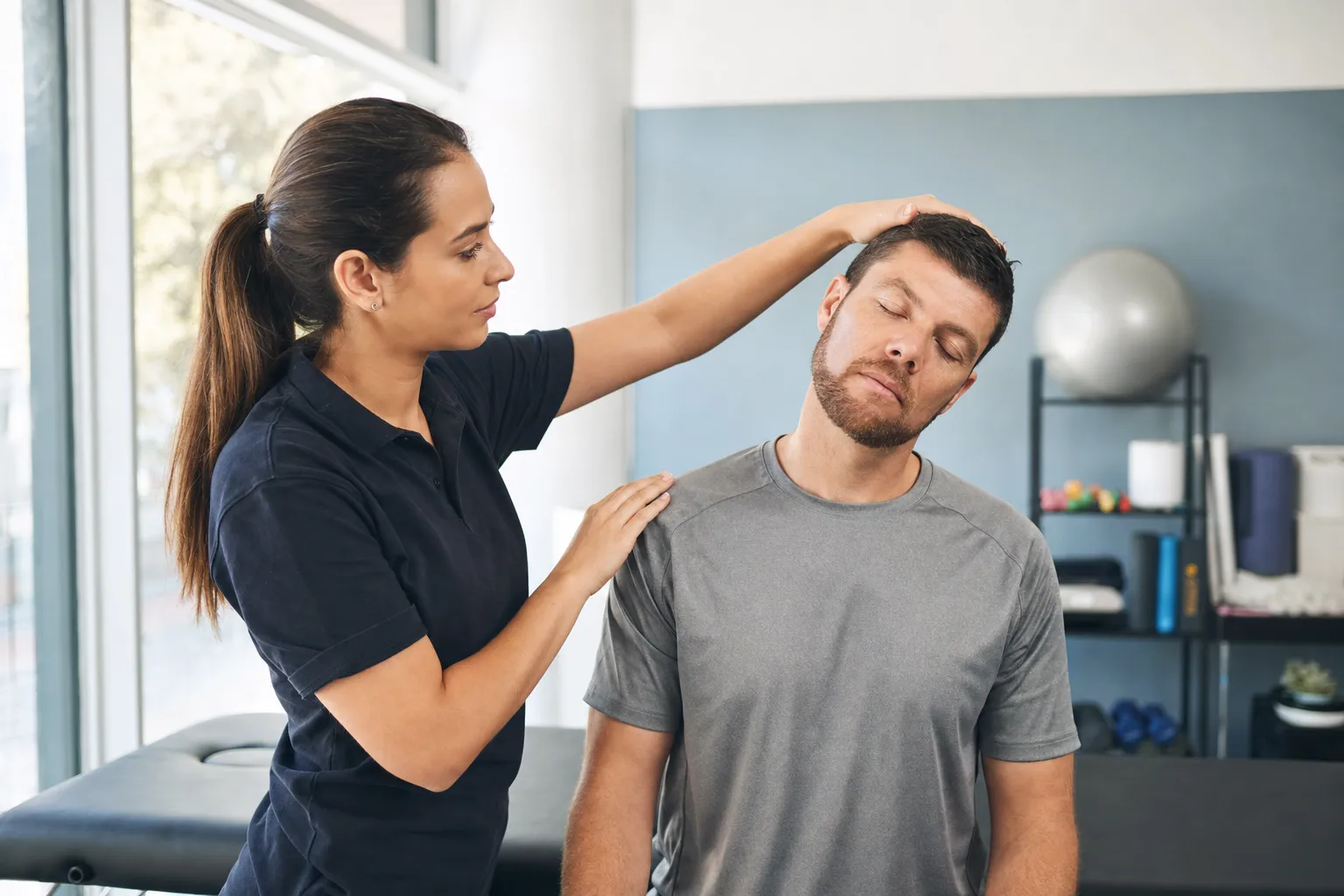
Neck pain is one of the most common reasons New Brunswick residents and Rutgers students and staff come to see us. It is also common worldwide: an estimated 203 million people had neck pain in 2020, and it causes considerable pain and disability.[1] Long hours on phones and computers and high stress have both been linked with neck pain in college students.[2] Here's what you need to know about your treatment options.
What Can Contribute to Neck Pain
Many different factors have been linked with neck pain. A review of 30 studies in college students linked it with long daily use of phones and computers, long periods with the head bent down, poor sitting posture, lack of exercise, staying up late, an unsuitable pillow, high stress and emotional problems.[2] In studies of what comes before a first episode of neck pain, most of the risk factors found were psychological or social, such as low mood and feeling muscle tension; working in awkward or sustained postures was the most commonly reported physical one.[3] These studies show links, not proof that any single habit causes neck pain.
Study and Work Habits
- Long hours studying or working at a screen
- Long stretches looking down at phones and tablets
- Sitting or holding one position for long periods
- Stress, low mood and feeling tense
Lifestyle Factors
- Staying up late
- A pillow that doesn't suit you
- Not getting enough exercise
Types of Neck Pain We Treat
Mechanical (Non-Specific) Neck Pain
This is neck pain that is not caused by a serious medical condition or a pinched nerve. Clinicians first check for serious causes before treating it.[4] Many factors, including the habits and stresses listed above, have been linked with neck pain.[2][3]
Cervical Radiculopathy (Pinched Nerve)
This happens when a nerve root in the neck is compressed or irritated.[5] Most treatment studies define it by pain in the arm, with or without numbness, tingling or weakness.[6] Signs can include:
- Pain spreading from the neck into the arm
- Numbness or tingling in the arm or hand
- Weakness in the arm muscles
Headaches from the Neck (Cervicogenic)
Some headaches come from a problem in the neck, but this appears to be uncommon: in two studies from specialist headache clinics, about 3 in 100 adults evaluated for headache had a neck-related (cervicogenic) headache.[7] Features that can point toward a headache from the neck include:[8]
- Pain that starts at the back of the head and spreads forward
- Headache that stays on the same side
- Headache brought on by moving the head or by pressure on the neck muscles
These features are not unique to neck-related headaches, so a careful assessment matters.[8] For long-lasting headaches from the neck, strengthening and endurance exercises for the neck and shoulder-blade area may help, based on moderate-quality evidence.[9]
The McKenzie Method for Neck Pain
At Spineck Physical Therapy, we use the McKenzie Method, also called Mechanical Diagnosis and Therapy (MDT), as the framework for assessing and treating neck pain. Research on it for the neck is still limited. A 2014 review of five trials found that, for neck pain, MDT had effects on pain and disability similar to 'wait and see' and other approaches; the authors noted that in every trial, some or all of the treating therapists did not have the highest level of McKenzie training.[10] A 2026 review of eight small trials in long-lasting neck pain found small, short-term improvements in pain and disability, but the certainty of this evidence was low.[11] Here is how we use it:
Looks for Your Movement Pattern
Not all neck pain is the same. We check which movements make your pain better or worse and use this to guide your exercises. Some people have a 'directional preference': a direction of movement that eases their symptoms. In studies of people with spinal pain, about a third showed no such response. A favorable response is a well-established sign of a better outlook in low back pain, but the evidence for neck pain is limited.[12]
Teaches Self-Treatment
You'll learn exercises to do at home. For long-lasting neck pain, research suggests that strengthening exercises for the neck, shoulders and upper back may reduce pain and improve function, although the best available evidence is moderate quality.[9] Our goal is for you to be able to manage your symptoms on your own.
Combines Exercise With Hands-On Care When It Fits
A clinical practice guideline for neck pain of up to 6 months without nerve-related signs lists patient education combined with exercise, with or without hands-on treatment such as mobilization or manipulation, among its recommended options. It advises against passive treatments such as electrotherapy or clinic-based heat.[4] We follow that approach and adjust it to how your neck responds.
Our One-on-One Approach to Neck Pain
We believe a thorough evaluation and any hands-on treatment deserve your therapist's full attention. At Spineck PT:
- You receive 100% of your therapist's attention
- No double-booking, so there is time for a thorough assessment
- Treatment is adjusted based on your response
- You have time to ask questions and learn proper techniques
New Brunswick to East Brunswick: Just 5 Minutes
Our clinic at 646 NJ-18 North in East Brunswick is incredibly convenient for New Brunswick residents:
- Quick drive down Route 18 South
- Free parking on-site
- Flexible hours from 8:30am to 8pm
- Easy to fit between classes or after work
When to Get Checked
Most neck pain is not dangerous, and staying active and moving is important.[4] Consider an evaluation if you have:
- Pain lasting more than a few days
- Numbness or tingling in your arm or hand
- Difficulty turning your head
- Pain that disrupts your sleep
See a doctor if your symptoms get worse or new symptoms appear.[4]
Get emergency medical care, not physical therapy, for a sudden, severe headache that reaches its peak within an hour, especially with neck pain or stiffness, which can be a sign of bleeding around the brain,[13] or a headache with fever and a stiff neck (especially with confusion), which can be a sign of meningitis.[14]
What to Expect at Your First Visit
- Detailed History - We'll discuss your symptoms, how they started, and what affects them
- Physical Examination - Assessment of posture, movement, strength, and sensation
- Movement Testing - Identifying which movements help or hurt
- Initial Treatment - Starting exercises chosen to help ease your pain
- Home Program - Instructions for what to do between visits
Everyday Neck Tips for New Brunswick Residents
- Break up long study or work sessions and change position often (we suggest a quick break every 30-45 minutes as a practical reminder). Working in awkward or sustained postures has been linked with neck pain.[3]
- Set up a comfortable workspace, but don't rely on it alone: ergonomic programs on their own have not been shown to prevent neck pain.[15]
- Limit long stretches looking down at your phone; long periods with the head bent down have been linked with neck pain in college students.[2]
- Exercise regularly. Exercise programs may lower the risk of a new episode of neck pain,[15] and for long-lasting neck pain, strengthening exercises have more support than stretching alone.[9]
- Look after your sleep and stress: staying up late, high stress and emotional problems have all been linked with neck pain in college students.[2]
Take Control of Your Neck Pain
Help is available. In studies that followed people from the start of a new episode of neck pain, average pain fell by almost half in the first six weeks or so, but average pain scores were still around 40 out of 100 a year later.[16] If your neck pain isn't settling, it is worth getting it checked.
New Brunswick residents: get help with your neck pain. Call 551-208-3234 to schedule your evaluation at Spineck Physical Therapy, just 5 minutes away in East Brunswick.
References
- GBD 2021 Neck Pain Collaborators. Global, regional, and national burden of neck pain, 1990-2020, and projections to 2050: a systematic analysis of the Global Burden of Disease Study 2021. Lancet Rheumatol. 2024;6(3):e142-e155. doi:10.1016/S2665-9913(23)00321-1 · PubMed
- Gao Y, Chen Z, Chen S, et al. Risk factors for neck pain in college students: a systematic review and meta-analysis. BMC Public Health. 2023;23(1):1502. doi:10.1186/s12889-023-16212-7 · PubMed
- Kim R, Wiest C, Clark K, et al. Identifying risk factors for first-episode neck pain: a systematic review. Musculoskelet Sci Pract. 2018;33:77-83. doi:10.1016/j.msksp.2017.11.007 · PubMed
- Côté P, Wong JJ, Sutton D, et al. Management of neck pain and associated disorders: a clinical practice guideline from the Ontario Protocol for Traffic Injury Management (OPTIMa) Collaboration. Eur Spine J. 2016;25(7):2000-2022. doi:10.1007/s00586-016-4467-7 · PubMed
- Bono CM, Ghiselli G, Gilbert TJ, et al. An evidence-based clinical guideline for the diagnosis and treatment of cervical radiculopathy from degenerative disorders. Spine J. 2011;11(1):64-72. doi:10.1016/j.spinee.2010.10.023 · PubMed
- Plener J, da Silva-Oolup S, To D, et al. Eligibility criteria of participants in randomized controlled trials assessing conservative management of cervical radiculopathy: a systematic review. Spine (Phila Pa 1976). 2023;48(10):E132-E157. doi:10.1097/BRS.0000000000004537 · PubMed
- Robinson CL, Christensen RH, Al-Khazali HM, et al. Prevalence and relative frequency of cervicogenic headache in population- and clinic-based studies: a systematic review and meta-analysis. Cephalalgia. 2025;45(3):3331024251322446. doi:10.1177/03331024251322446 · PubMed
- Headache Classification Committee of the International Headache Society (IHS). The International Classification of Headache Disorders, 3rd edition. Cephalalgia. 2018;38(1):1-211. doi:10.1177/0333102417738202 · PubMed
- Gross A, Kay TM, Paquin JP, et al. Exercises for mechanical neck disorders. Cochrane Database Syst Rev. 2015;1(1):CD004250. doi:10.1002/14651858.CD004250.pub5 · PubMed
- Takasaki H, May S. Mechanical diagnosis and therapy has similar effects on pain and disability as 'wait and see' and other approaches in people with neck pain: a systematic review. J Physiother. 2014;60(2):78-84. doi:10.1016/j.jphys.2014.05.006 · PubMed
- García-López H, Morales-Quintana Á, Obrero-Gaitán E, et al. Effectiveness of the McKenzie-based exercises in improving pain, disability, and cervical range of motion in patients with chronic non-specific neck pain: a systematic review with meta-analysis. Physiother Theory Pract. Published online April 6, 2026. doi:10.1080/09593985.2026.2650405 · PubMed
- May S, Runge N, Aina A. Centralization and directional preference: an updated systematic review with synthesis of previous evidence. Musculoskelet Sci Pract. 2018;38:53-62. doi:10.1016/j.msksp.2018.09.006 · PubMed
- Perry JJ, Stiell IG, Sivilotti ML, et al. Clinical decision rules to rule out subarachnoid hemorrhage for acute headache. JAMA. 2013;310(12):1248-1255. doi:10.1001/jama.2013.278018 · PubMed
- van de Beek D, de Gans J, Spanjaard L, et al. Clinical features and prognostic factors in adults with bacterial meningitis. N Engl J Med. 2004;351(18):1849-1859. doi:10.1056/NEJMoa040845 · PubMed
- de Campos TF, Maher CG, Steffens D, et al. Exercise programs may be effective in preventing a new episode of neck pain: a systematic review and meta-analysis. J Physiother. 2018;64(3):159-165. doi:10.1016/j.jphys.2018.05.003 · PubMed
- Hush JM, Lin CC, Michaleff ZA, et al. Prognosis of acute idiopathic neck pain is poor: a systematic review and meta-analysis. Arch Phys Med Rehabil. 2011;92(5):824-829. doi:10.1016/j.apmr.2010.12.025 · PubMed
This article is for general education and is not a substitute for an individual evaluation by a licensed clinician.
Need Help With Your Condition?
If you're experiencing pain or have questions about physical therapy, schedule an appointment with our Certified McKenzie Therapist.
This article is for educational purposes only and is not a substitute for professional medical advice, diagnosis, or treatment. Always consult a licensed healthcare provider about your specific condition.