Sports Injury Rehabilitation for Central New Jersey Athletes

Medically reviewed by Devanshi Modi, PT, Cert. MDT, CMP — licensed physical therapist with over 15 years of clinical experience.
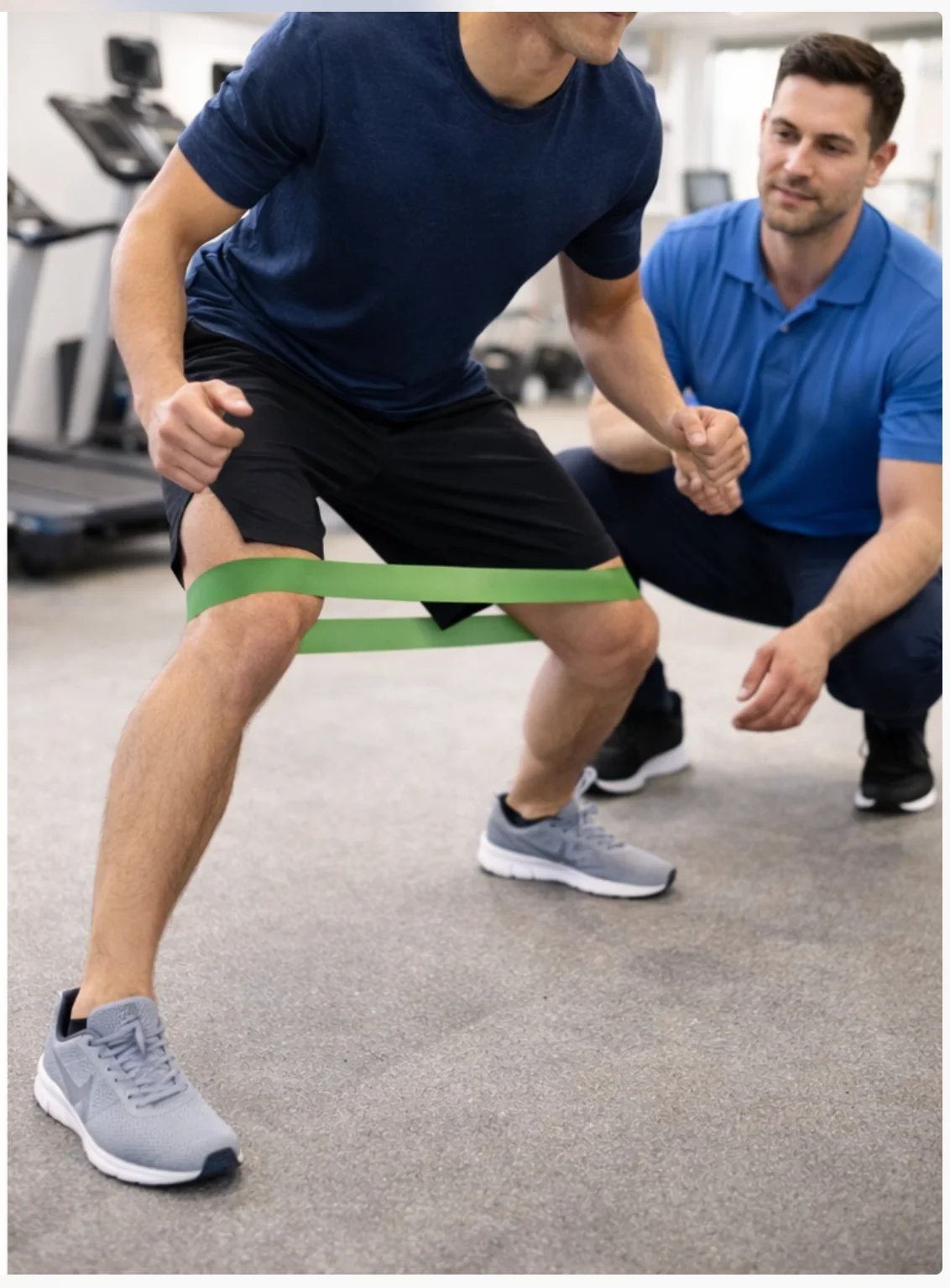
Central New Jersey is home to dedicated athletes of all levels, from Rutgers University competitors to weekend warriors at local parks and recreational leagues. When a sports injury happens, rehabilitation can help you recover and get back to the activities you love. For ankle sprains, for example, reviews of the research support early movement and exercise to ease pain and swelling and improve function, and balance (neuromuscular) training to lower the chance of spraining the same ankle again.[1]
Common Sports Injuries We Treat
Running Injuries
With beautiful trails at Johnson Park and Roosevelt Park, running is popular in our area. A review of running injury studies found these among the most common running injuries.[2]
- Runner's knee (patellofemoral pain syndrome)
- IT band syndrome
- Shin splints (medial tibial stress syndrome)
- Achilles tendinopathy (often called Achilles tendonitis)
- Plantar fasciitis
Team Sports Injuries
Whether you play in adult leagues or coach youth sports, team sports can lead to injuries. In U.S. college injury data covering 15 sports over 16 years (1988 to 2004), more than half of all injuries were to the legs, and ankle sprains were the single most common injury, at about 15% of the total.[3] Team-sport injuries we treat include:
- ACL and meniscus tears
- Ankle sprains
- Shoulder injuries (rotator cuff, labrum)
- Muscle strains
Tennis and Racquet Sports
Tennis and racquet sports are popular at local clubs throughout Middlesex County. A review of tennis injury research found that sudden injuries, such as ankle sprains, happen more often in the legs, while overuse injuries, such as tennis elbow, are more common in the arms of recreational players, and shoulder pain is more common in high-level players.[4] Tennis and racquet sport problems we treat include:
- Tennis elbow (lateral epicondylitis)
- Shoulder pain, including impingement
- Wrist injuries
- Ankle sprains
Golf Injuries
With several courses in Central NJ, golf is popular here too. In a review of 20 studies with more than 9,000 golfers, about 57% of amateur golfers had had a musculoskeletal injury at some point in their lives.[5] Golf-related problems we treat include:
- Low back pain
- Elbow pain, including golfer's elbow and tennis elbow
- Hip and shoulder issues
Our Approach to Sports Rehabilitation
At Spineck Physical Therapy in East Brunswick, we build each athlete's plan around their injury, their sport, and their goals. Our approach includes:
1. Comprehensive Evaluation
Along with examining the injured area, we look at how you move in the activities your sport demands, and we use what we find to shape your plan.
2. Sport-Specific Treatment
Your rehabilitation plan considers the specific demands of your sport, so a runner's plan and a tennis player's plan will usually look different, even for a similar injury.
3. Progressive Return-to-Sport Protocol
Being pain-free is not the finish line. An international consensus of sports physical therapy experts recommends treating return to sport as a gradual process that runs alongside your rehab, rather than a single decision at the end, and noted that research to guide return-to-sport decisions was scarce.[6] So we progress your return step by step and decide together when you're ready for each stage.
4. Injury Prevention Education
We teach you exercises that can help lower your risk of future injuries. In a review of 25 randomized trials with more than 26,000 participants, strength training, balance (proprioception) training, and programs combining several types of exercise lowered the risk of sports injuries, while stretching alone did not.[7]
Why Athletes Choose One-on-One Care
If you're eager to get back to your sport and want focused attention, here's what to expect at Spineck PT:
- Every session is one-on-one with your therapist
- No being passed off to aides or techs
- Detailed assessment of your movement patterns
- Personalized treatment progression
Convenient for Central NJ Athletes
Located on Route 18 in East Brunswick, we're easily accessible from:
- Rutgers University and New Brunswick (5 min)
- North Brunswick recreational facilities (8 min)
- South River and local sports leagues (8 min)
- Sayreville and Old Bridge (10-12 min)
When to See a Physical Therapist
Seek professional help for:
- Pain that doesn't improve with rest
- Swelling that persists
- Instability or giving way
- Decreased range of motion
- Pain that limits your performance
Get Back in the Game
How fully and how quickly you get back depends on the injury. For example, after ACL reconstruction, a major knee surgery, a review of 69 studies with more than 7,500 people found that about 81% returned to some sport, about 65% returned to their pre-injury level of sport, and about 55% returned to competitive sport.[8] If an injury is keeping you on the sidelines, an evaluation is a good first step.
Ready to start your recovery? Call 551-208-3234 to schedule your sports injury evaluation at Spineck Physical Therapy.
References
- Doherty C, Bleakley C, Delahunt E, et al. Treatment and prevention of acute and recurrent ankle sprain: an overview of systematic reviews with meta-analysis. Br J Sports Med. 2017;51(2):113-125. doi:10.1136/bjsports-2016-096178 · PubMed
- Kakouris N, Yener N, Fong DTP. A systematic review of running-related musculoskeletal injuries in runners. J Sport Health Sci. 2021;10(5):513-522. doi:10.1016/j.jshs.2021.04.001 · PubMed
- Hootman JM, Dick R, Agel J. Epidemiology of collegiate injuries for 15 sports: summary and recommendations for injury prevention initiatives. J Athl Train. 2007;42(2):311-319. PubMed
- Abrams GD, Renstrom PA, Safran MR. Epidemiology of musculoskeletal injury in the tennis player. Br J Sports Med. 2012;46(7):492-498. doi:10.1136/bjsports-2012-091164 · PubMed
- Williamson TR, Kay RS, Robinson PG, et al. Epidemiology of musculoskeletal injury in professional and amateur golfers: a systematic review and meta-analysis. Br J Sports Med. 2024;58(11):606-614. doi:10.1136/bjsports-2023-107324 · PubMed
- Ardern CL, Glasgow P, Schneiders A, et al. 2016 Consensus statement on return to sport from the First World Congress in Sports Physical Therapy, Bern. Br J Sports Med. 2016;50(14):853-864. doi:10.1136/bjsports-2016-096278 · PubMed
- Lauersen JB, Bertelsen DM, Andersen LB. The effectiveness of exercise interventions to prevent sports injuries: a systematic review and meta-analysis of randomised controlled trials. Br J Sports Med. 2014;48(11):871-877. doi:10.1136/bjsports-2013-092538 · PubMed
- Ardern CL, Taylor NF, Feller JA, et al. Fifty-five per cent return to competitive sport following anterior cruciate ligament reconstruction surgery: an updated systematic review and meta-analysis including aspects of physical functioning and contextual factors. Br J Sports Med. 2014;48(21):1543-1552. doi:10.1136/bjsports-2013-093398 · PubMed
This article is for general education and is not a substitute for an individual evaluation by a licensed clinician.
Need Help With Your Condition?
If you're experiencing pain or have questions about physical therapy, schedule an appointment with our Certified McKenzie Therapist.
This article is for educational purposes only and is not a substitute for professional medical advice, diagnosis, or treatment. Always consult a licensed healthcare provider about your specific condition.