Back Pain Treatment in East Brunswick, NJ: A McKenzie Method Approach

Medically reviewed by Devanshi Modi, PT, Cert. MDT, CMP — licensed physical therapist with over 15 years of clinical experience.
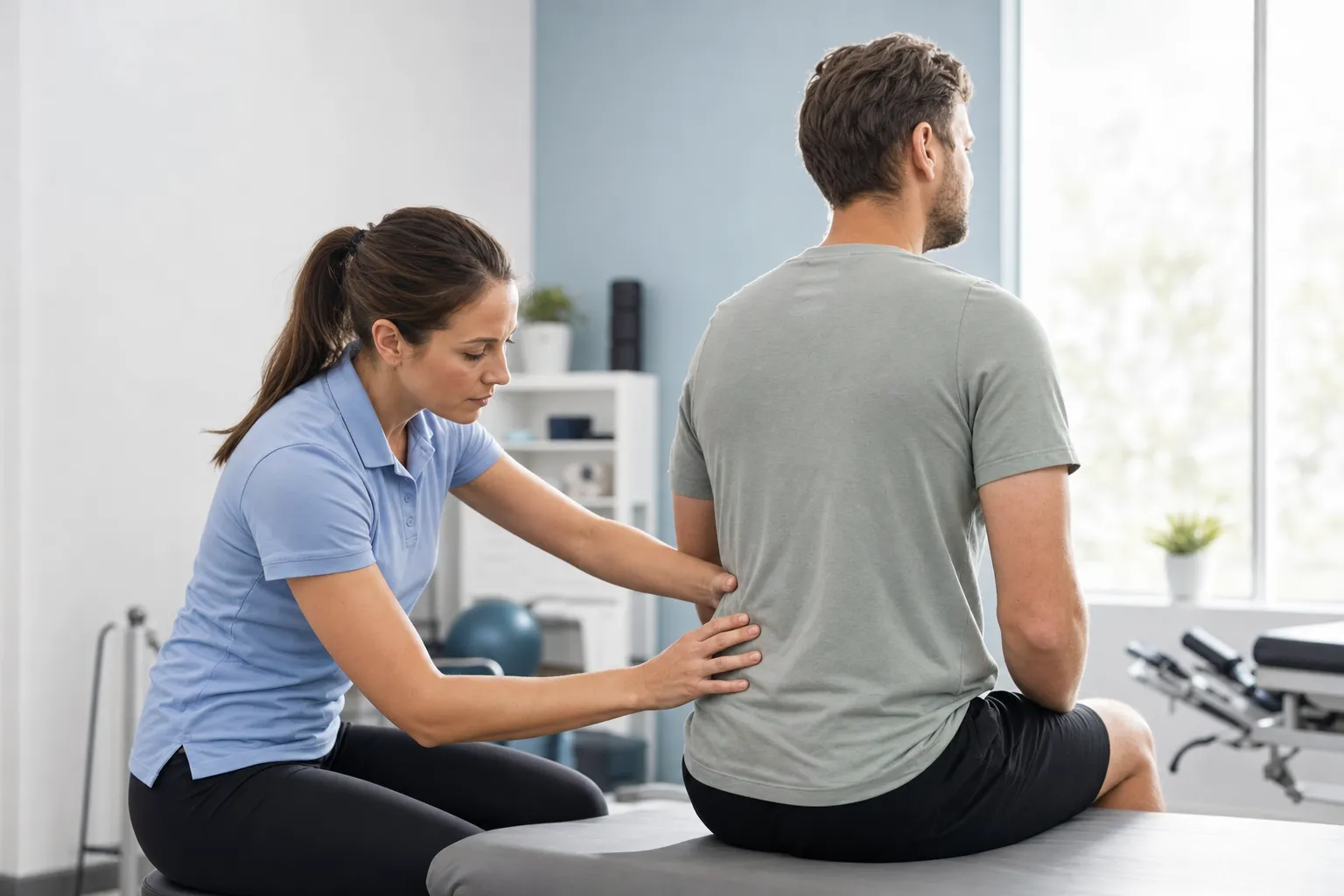
If you live in East Brunswick and have been dealing with back pain that just won't quit, you are far from alone. Low back pain is very common and is now the leading cause of disability worldwide.[1] Yet back pain care often falls short of the research: recommended first-line treatments are underused, while scans, rest, opioids, spinal injections and surgery are overused.[2]
The good news is that most people with a new episode of back pain recover quickly, although it often comes back.[1] Clinical guidelines recommend starting with non-drug care — education that supports self-management, staying active and exercise — and using medication, scans and surgery prudently.[2]
At Spineck Physical Therapy on Route 18 in East Brunswick, we take an assessment-first approach to back pain. For nearly all people with back pain, no specific source of the pain can be pinpointed,[1] so instead of handing you a generic sheet of stretches, we start by carefully assessing how your back responds to different movements and positions.
The Types of Back Pain We Treat
Back pain varies from person to person: people differ in which movements and positions aggravate or ease their pain.[3] We commonly help East Brunswick patients with:
- Mechanical low back pain — pain that changes with certain movements or positions
- Disc-related pain — including symptoms from a herniated disc. Disc bulges are also common on scans of people with no back pain (about 30% of pain-free 20-year-olds and 84% of pain-free 80-year-olds), so a bulge on a scan isn't necessarily the cause of your pain[4]
- Sciatica and radiating pain — pain that travels into the buttock or leg
- Pain with prolonged sitting or standing — discomfort that builds up when you stay in one position for a long time
- Post-surgical recovery — rebuilding strength and mobility after lower back (lumbar) surgery. Guidelines support general exercise after lumbar surgery, though the research behind this is limited and mixed[5]
A careful evaluation helps work out which of these patterns fits you best, and checks for the small number of cases with a specific medical cause, such as a fracture or infection, that need medical attention.[1]
Our Approach: Assessment First
Devanshi Modi is certified in Mechanical Diagnosis and Therapy (Cert. MDT), better known as the McKenzie Method. This approach uses a structured assessment of repeated movements and positions to see whether your symptoms have a "directional preference" — a direction of movement that consistently eases them. In research studies, roughly two in three patients with back or neck pain showed either a directional preference or centralization (explained below), while about a third showed neither.[3]
In plain terms, we look for the movements that make your pain worse and, more importantly, the movements that ease it and, in some people, draw leg or buttock pain back toward the spine (a response clinicians call centralization). When centralization or a directional preference is present, research links it with a better outlook for recovery, especially in low back pain (the evidence for neck pain is limited), though not everyone has one.[3]
What we learn guides the exercises in your plan. U.S. physical therapy guidelines list MDT among the approaches therapists may use for both recent and long-lasting back pain, with stronger evidence behind its use for long-lasting pain.[5] For recent back pain (under 12 weeks), studies have not found it to work better than other rehabilitation approaches,[6] and a Cochrane review, based on low-certainty evidence, found its benefits too small to be clinically important.[7] For back pain lasting more than 12 weeks, it may reduce disability somewhat more than exercise alone, though not more than manual therapy combined with exercise.[6]
What to Expect at Spineck
Every visit at Spineck is genuinely one-on-one with Devanshi — no aides and no split attention. You see the same therapist at every visit, and your plan is adjusted based on what has and hasn't worked for you so far.
A typical course of care includes:
- A thorough movement evaluation to see what aggravates and what eases your pain
- Hands-on treatment and targeted, individualized exercises[5]
- Education so you understand your condition and can manage flare-ups yourself[2]
- A clear plan to return to the activities you love
Common Questions
Do I need a referral to start? In New Jersey, you can typically begin physical therapy through direct access. We are happy to help you understand your options.
Will PT help if I've had back pain for years? Often, yes. For back pain lasting more than three months, exercise therapy probably reduces pain in the short term compared with no treatment, usual care or placebo — on average by about 15 points on a 0–100 pain scale — although its effect on day-to-day function is smaller.[8] Guidelines recommend exercise for long-lasting back pain.[5] Research also recommends checking for a pain-easing movement direction even in long-standing back pain, although not everyone has one.[3]
How many sessions will I need? It varies by person and condition, but our goal is always to make you independent as quickly as safely possible.
Care Close to Home
We proudly serve East Brunswick and the surrounding Middlesex County communities from our Route 18 location. If back pain is holding you back, let's take a closer look at what aggravates it and what helps.
Call us at 551-208-3234 to schedule your evaluation and take the first step toward feeling and moving better.
References
- Hartvigsen J, Hancock MJ, Kongsted A, et al. What low back pain is and why we need to pay attention. Lancet. 2018;391(10137):2356-2367. doi:10.1016/S0140-6736(18)30480-X · PubMed
- Foster NE, Anema JR, Cherkin D, et al. Prevention and treatment of low back pain: evidence, challenges, and promising directions. Lancet. 2018;391(10137):2368-2383. doi:10.1016/S0140-6736(18)30489-6 · PubMed
- May S, Runge N, Aina A. Centralization and directional preference: an updated systematic review with synthesis of previous evidence. Musculoskelet Sci Pract. 2018;38:53-62. doi:10.1016/j.msksp.2018.09.006 · PubMed
- Brinjikji W, Luetmer PH, Comstock B, et al. Systematic literature review of imaging features of spinal degeneration in asymptomatic populations. AJNR Am J Neuroradiol. 2015;36(4):811-816. doi:10.3174/ajnr.A4173 · PubMed
- George SZ, Fritz JM, Silfies SP, et al. Interventions for the management of acute and chronic low back pain: revision 2021. J Orthop Sports Phys Ther. 2021;51(11):CPG1-CPG60. doi:10.2519/jospt.2021.0304 · PubMed
- Lam OT, Strenger DM, Chan-Fee M, et al. Effectiveness of the McKenzie method of Mechanical Diagnosis and Therapy for treating low back pain: literature review with meta-analysis. J Orthop Sports Phys Ther. 2018;48(6):476-490. doi:10.2519/jospt.2018.7562 · PubMed
- Almeida MO, Narciso Garcia A, Menezes Costa LC, et al. The McKenzie method for (sub)acute non-specific low back pain. Cochrane Database Syst Rev. 2023;4(4):CD009711. doi:10.1002/14651858.CD009711.pub2 · PubMed
- Hayden JA, Ellis J, Ogilvie R, et al. Exercise therapy for chronic low back pain. Cochrane Database Syst Rev. 2021;9(9):CD009790. doi:10.1002/14651858.CD009790.pub2 · PubMed
This article is for general education and is not a substitute for an individual evaluation by a licensed clinician.
Need Help With Your Condition?
If you're experiencing pain or have questions about physical therapy, schedule an appointment with our Certified McKenzie Therapist.
This article is for educational purposes only and is not a substitute for professional medical advice, diagnosis, or treatment. Always consult a licensed healthcare provider about your specific condition.